Navy EOD Officer Killed in Afghanistan

Washington, D.C. Representative Crawford (R- Arkansas) introduced a Resolution in the House to designate the first Saturday in May as National EOD Day. The Resolution also calls for the designation of the infamous 'Initial Success or Total Failure' motto to be adopted as the official motto of the EOD organizations in the United States Armed Forces.
Helmand Province, Afghanistan Staff Sgt. Joseph H. Fankhauser, 30, a Marine EOD technician from McAllen, Texas, died during combat operations. Fankhauser was assigned to 7th Engineer Support Battalion and was on his fifth combat deployment. He deployed three times to Iraq and had deployed to Afghanistan last year. Two Purple Heart medals and two Combat Action Ribbons are among the more than a dozen military awards and decorations he earned since 2000 when he enlisted in the Marine Corps.
Afghanistan An IED claimed the life of another brave EOD technician fighting the war of terror, 29 year-old Staff Sergeant Joseph D'Augustine. Staff Sergeant D'Augustine had served a total of four tours of duty in Afghanistan and Iraq. Details surrounding his death have not been released. D'Augustine was from Waldwick, New Jersey and is survived by his parents and three sisters.
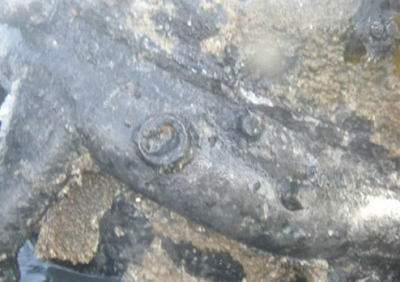
The bomb disposal team initially set-up a 120-foot exclusion zone around the area. Due to the sheer size of the rocket and the muddy conditions, it was impossible to tell how much of the rocket remained. The V2 was a liquid-propellant rocket that packed close to 2,000 lbs of explosives. The V2s were notoriously inaccurate but when they did hit their intended target, they created massive destruction. Historians estimate that more than 3,000 V2 rockets were launched by the Germans mainly against targets in London and Antwerp.
Kalavasos, Cyprus Three pounds of TNT were reported missing by an explosives team with the Cyprus National Guard during what was supposed to be a routine munitions disposal operation. The reported theft occurred at the Kalo Chorio firing range when the 42 pits of obsolete and unserviceable munitions were being destroyed. The National Guard placed TNT donor charges in each of the 42 pits containing munitions. After the shots were initiated and Guard personnel checked the holes, they found one of the pits with the munitions still intact with no donor explosives charges present.
The incident was immediately reported and a helicopter stationed at the Larnaca airport was scrambled to the scene. The helicopter spotted a jeep driving away from the scene at an excessive rate of speed. Police responded and arrested the two men in the jeep who were reportedly scrap metal collectors known to hang around the Kalo Chorio firing range. The missing TNT charges were not found in the car.
Charleston, South Carolina A Civil War era munition was uncovered in a flower bed located in the horseshoe area of the Medical University of South Carolina. The Charleston police department responded with technical support provided by an Air Force EOD unit. The EOD unit safely removed the munition from the area for proper disposal. The exact type of munition found was not reported.